
African tech communities are far more active than most people assume. Weekly participation rates in African WhatsApp groups hit 40 to 45%, nearly double the 20 to 30% global average. That gap tells a bigger story. Tech professionals across the continent are hungry for connection, peer support, and real opportunities. This guide breaks down why discussion platforms matter, which types work best, and how you can use them to grow your network, sharpen your ideas, and move your career or startup forward.
Table of Contents
- Why discussion platforms matter for African tech professionals
- Core benefits: Networking, learning, and career growth
- Platform types and mechanics: From WhatsApp to professional forums
- Moderation and structure: Ensuring quality interaction
- Real-world impact: Startup performance, belonging, and future trends
- How to get started with a trusted discussion platform
- Frequently asked questions
Key Takeaways
| Point | Details |
|---|---|
| High engagement is possible | African tech discussion platforms consistently exceed global engagement benchmarks when designed for local realities. |
| Moderation matters | Well-moderated, structured platforms deliver real value by curating relevant conversations and reducing noise. |
| Startup outcomes improve | Peer-driven interaction and participation on discussion platforms measurably boost business plan quality and brand growth. |
| Choose platforms carefully | Your best-fit platform balances accessibility, moderation, and features for your goals and community needs. |
Why discussion platforms matter for African tech professionals
Building a tech startup or career in Africa often means working without a strong local support system. You may be the only developer in your city working on a SaaS product, or the only founder in your network who understands what a cap table is. That isolation is real, and it slows progress.
Discussion platforms fill that gap directly. They connect you with peers who face the same challenges, mentors who have solved similar problems, and communities that share resources you cannot easily find offline. African entrepreneurs without peers rely on these communities to expand AI usage, access support, and exchange ideas that local ecosystems simply do not provide.
"The most valuable thing a platform can offer is not content. It is access to people who understand your context."
Here is what well-structured discussion platforms deliver for African tech professionals:
- Peer support from founders and developers who understand local market realities
- Resource sharing including tools, templates, funding leads, and vendor recommendations
- Accountability through group challenges, check-ins, and collaborative projects
- Visibility for your work, product, or startup within a relevant audience
- Job leads and collaboration requests from within trusted communities
The growth from joining platforms is not accidental. It comes from consistent, moderated interaction with people who are invested in the same outcomes. And 2026 networking in online communities has made that access faster and more structured than ever before.
Core benefits: Networking, learning, and career growth
The practical outcomes of joining the right platform go beyond casual conversation. Research backs this up. A pan-African RCT with 5,000 entrepreneurs found that peer networks directly improve entrepreneurship outcomes, including business plan quality and submission rates. That is not a soft benefit. That is a measurable competitive edge.
Platforms like Jobtech Alliance model this well. They use dedicated sub-communities organized around specific topics, job types, and skill sets, making peer learning and job discovery far more targeted and useful.
Here are five real outcomes you can expect from active participation:
- Stronger career networks built through consistent, topic-focused engagement
- Faster peer learning from professionals who have already solved your current problem
- Relevant job opportunities surfaced through community job boards and referrals
- Higher-quality output from feedback loops within trusted peer groups
- Exposure to investors and accelerators who monitor active tech communities
Pro Tip: Look for platforms that organize members into smaller pods or sub-communities. A group of 20 engaged peers beats a group of 2,000 passive followers every time.
The networking for career growth that happens inside well-run communities is compounding. The more you contribute, the more visible and valuable you become to others in the space.
Platform types and mechanics: From WhatsApp to professional forums
Not every platform works the same way, and not every platform fits every need. Understanding the trade-offs helps you choose where to invest your time.

| Platform | Best for | Key strength | Key weakness |
|---|---|---|---|
| Broad community reach | Low barrier, high engagement | Hard to search, no threading | |
| Telegram | Large broadcast groups | Scalable, fast | Prone to noise without moderation |
| Slack | Team and project collaboration | Organized channels, integrations | Requires stable internet |
| Specialized forums | Deep topic discussion | Persistent knowledge, searchable | Slower engagement pace |
| Discors.chat | Real-time professional discussion | Moderated, focused, privacy-first | Newer, growing user base |
WhatsApp achieves 40 to 45% weekly participation in African tech communities because it meets users where they are. Low data requirements, familiar interface, and peer moderation keep engagement high. But it has real limits. Conversations disappear, threads are hard to follow, and scaling a group beyond 250 members often kills the signal.
Here is what to look for in any platform you consider:
- Moderation tools that let admins manage quality without killing conversation
- Device compatibility that works on 2G or 3G connections
- Knowledge persistence so valuable discussions stay searchable
- Community pods or sub-groups for focused, relevant interaction
- Job boards or opportunity feeds built into the platform
For a detailed networking platforms comparison, or to explore the best platforms in 2026, check out those resources before committing to a single channel.
Moderation and structure: Ensuring quality interaction
The difference between a useful community and a noisy group chat is almost always moderation. Without it, even the most talented members stop contributing because the signal-to-noise ratio becomes too low.
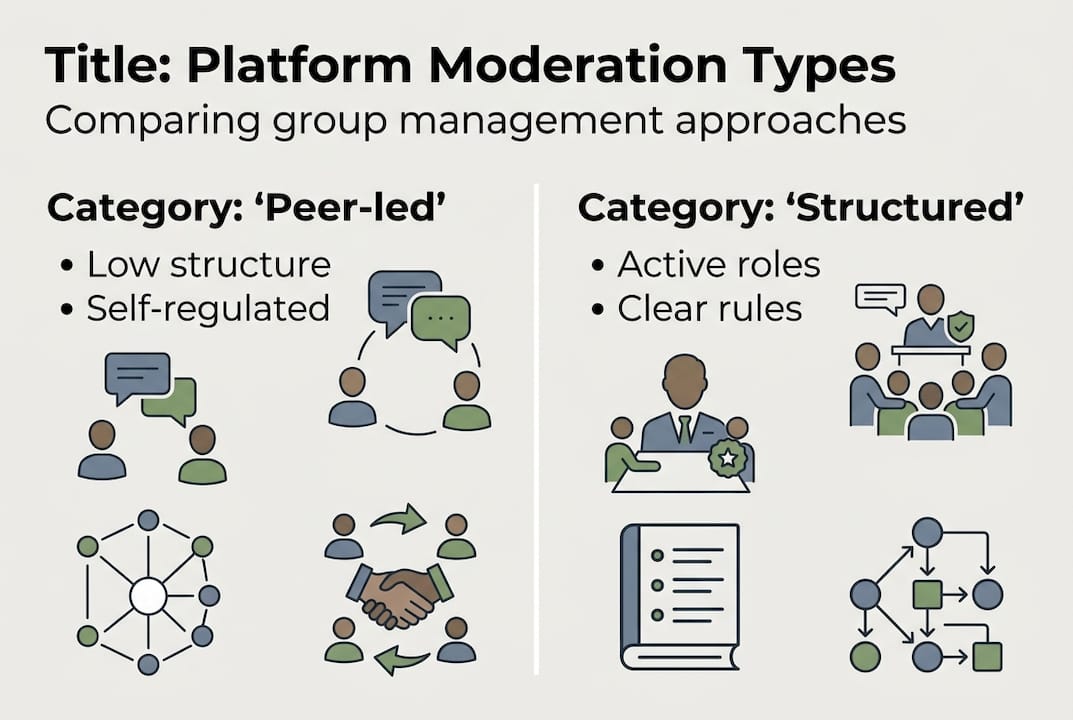
There are three main moderation approaches used in African tech communities:
| Moderation type | How it works | Best use case |
|---|---|---|
| Peer-led | Members flag and self-regulate | Small, trust-based groups |
| Expert-led | Designated moderators curate content | Topic-specific forums |
| Automated | Bots filter spam and enforce rules | Large-scale platforms |
Structured moderation as practiced by Jobtech Alliance through sub-communities and WhatsApp engagement pods keeps conversations relevant and high-signal. Members know what is expected, and off-topic noise gets redirected quickly.
Pro Tip: Before joining any community, check whether it has clear ground rules, active moderators, and a defined focus. A platform without those three things will waste your time within weeks.
Privacy and compliance are also growing concerns in 2026. African tech professionals are increasingly aware of data handling practices, and platforms that are transparent about privacy policies earn more trust and longer-term engagement. Referral culture, where members invite peers they personally vouch for, is also rising as a quality filter. For practical 2026 moderation strategies, that resource covers the frameworks in detail.
Real-world impact: Startup performance, belonging, and future trends
The results of structured community engagement are showing up in startup data. A study of 450 Ghanaian startups found a direct link between digital and social platform use and improved startup performance, with brand image acting as the key driver. Startups that engaged consistently on relevant platforms built stronger reputations, which translated into better business outcomes.
"Belonging to the right community does not just feel good. It changes what you are able to build."
Beyond performance metrics, there is a practical belonging effect. When you are part of a community that understands your context, you take more risks, share more openly, and collaborate more freely. That openness is where innovation actually happens.
Here are the key trends shaping African tech discussion communities in 2026:
- Compliance focus as platforms adopt clearer data and privacy standards
- Community consolidation with smaller, higher-quality groups replacing massive, low-engagement ones
- Organic referral growth replacing paid acquisition as the primary way communities expand
- Persistent chat over ephemeral spaces as professionals demand searchable, referenceable discussions
- Cross-border collaboration as African tech professionals connect across markets more easily
For founders, these trends point toward one clear action: invest in fewer, better communities rather than spreading thin across many. Use platforms to launch products with discussion platforms and stay current on trending startup ideas in 2026 to stay ahead of where the market is moving.
How to get started with a trusted discussion platform
You now have a clear picture of what works, why it works, and what to look for. The next step is simple: find a platform that matches your goals and start contributing.

Discors.chat is built for exactly this. It is a real-time, moderated discussion platform designed for founders, developers, and tech professionals who want focused, high-quality conversations without the noise of traditional social media. You can start a discussion today and connect with a community that is actively building, hiring, and collaborating. If you want to go further, the guide on how to launch your online community walks you through setting up a space tailored to your niche. Africa's tech network is growing fast. Get in now.
Frequently asked questions
What makes a discussion platform valuable for African tech professionals?
Active moderation and peer learning create high engagement and trusted networking opportunities, especially when the platform is designed around focused sub-communities rather than open, unstructured groups.
How do I choose the right platform for my team or idea?
Consider engagement levels, whether the platform works on low-bandwidth connections, and whether it supports pods or moderated Q&A. Low-tech mechanics and peer moderation are proven drivers of consistent participation.
Can participation in discussion platforms really help my startup grow?
Yes. Peer networks improve business outcomes including plan quality and submission rates, and platform use boosts brand image which directly links to stronger startup performance.
What risks or pitfalls should I watch for in online communities?
Unmoderated groups cause information overload and reduce discussion quality fast. Always look for platforms with clear ground rules and moderation before investing your time and attention.