
Starting an online discussion can feel overwhelming when you’re unsure where to begin or how to keep members engaged. African tech entrepreneurs and professionals increasingly need vibrant digital spaces for networking, collaboration, and community building as the continent’s innovation ecosystem expands. This guide walks you through planning, executing, and sustaining productive online discussions that connect founders, developers, and innovators across Africa and beyond.
Table of Contents
Key takeaways
| Point | Details | |-------|---------|| | Clear niche and mission | Choosing a niche ensures your community has defined purpose and attracts like-minded individuals. | | Platform selection matters | Discord and Telegram offer features promoting engagement and accessibility across Africa. | | Consistent engagement drives success | Regular events, mentorship programs, and user-generated content sustain member participation and growth. | | Free tools enable launches | Leveraging open-source solutions and platform bots reduces costs for solo founders and small teams. | | Metrics guide improvement | Tracking engagement and gathering feedback helps refine strategies and maintain community relevance. |
Preparing to launch your online discussion
Establishing a clear foundation is essential for long-term success and engagement in a tech community. Before you create your first channel or invite members, invest time in defining what your community stands for and who it serves.
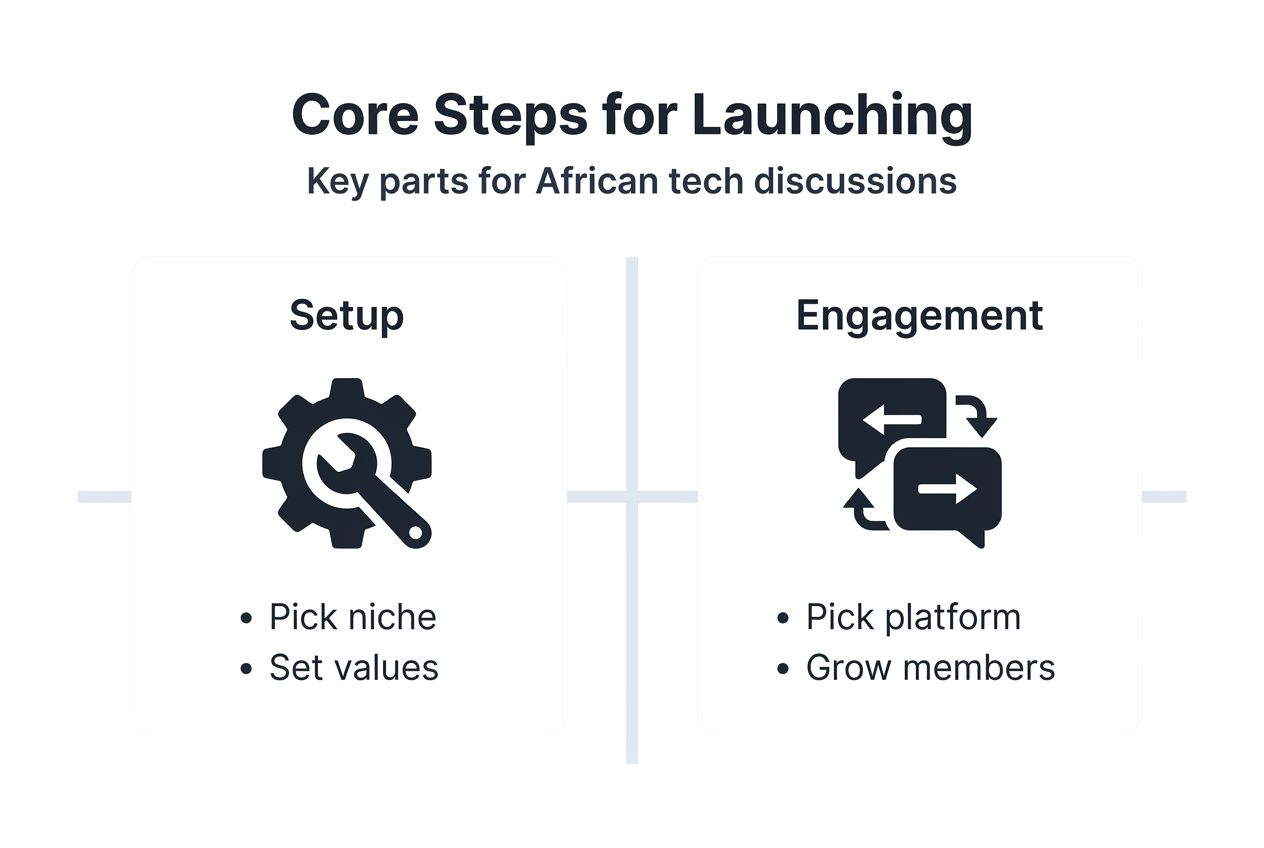
Select a specific niche within the tech ecosystem. Focusing on AI development, DevOps practices, cybersecurity, fintech innovation, or blockchain applications gives your discussion clear boundaries. A well-defined niche attracts passionate members who share common challenges and goals, making conversations more valuable and actionable.
Define your community’s mission and core values upfront. Write a brief mission statement explaining why your discussion exists and what members can expect. Articulate values like inclusivity, collaboration, innovation, or mentorship that will guide member interactions and moderation decisions.
Assess your available resources honestly. Consider how much time you can dedicate weekly to community management, whether you have budget for premium tools or paid moderators, and what technical skills you bring to setup and maintenance. Understanding your constraints helps you choose sustainable approaches rather than overcommitting.
Know your target audience deeply. Are you building for university students learning to code, experienced professionals seeking career opportunities, startup founders looking for co-founders, or investors scouting emerging talent? Each audience requires different content styles, engagement approaches, and value propositions.
Leverage free or open-source tools to minimize startup costs. Platforms like Discord and Telegram offer robust features without subscription fees. Community bots, analytics integrations, and moderation tools often have free tiers sufficient for growing communities.
Pro Tip: Document your niche, mission, values, and audience profile in a simple one-page guide. Share this with early members and moderators so everyone understands what makes your community unique and worth participating in.
-
Identify your specific tech niche and expertise area
-
Write a clear mission statement under 50 words
-
List your available time commitment and budget constraints
-
Create an audience persona describing your ideal member
-
Research free tools and platforms matching your needs
Choosing the right platform and launching your discussion
Discord is widely adopted in tech and Web3 communities with features promoting engagement through channels, roles, and integrations. Telegram remains indispensable for real-time updates and low-friction onboarding, especially in regions with varying internet connectivity across Africa.
Compare platform features based on your community needs. Discord excels at structured conversations with threaded discussions, voice channels for live collaboration, and extensive bot ecosystem for automation. Telegram offers simplicity, mobile-first design, large group capacity, and encrypted messaging appealing to privacy-conscious members.
Set up themed channels organizing conversations by topic or project stage. Create separate spaces for introductions, general discussion, technical questions, job postings, project showcases, and off-topic chat. Discord’s channel structure promotes focused and inclusive discussions by giving each conversation type its own home.

Define roles and permissions managing access and encouraging participation. Start with basic roles like Member, Contributor, Moderator, and Admin. Assign permissions controlling who can post, create threads, share files, or manage channels. Role hierarchies help members understand pathways for increased involvement.
Integrate bots for moderation, automated tasks, and quick information retrieval. Welcome bots greet new members with community guidelines. Moderation bots filter spam and enforce rules automatically. Utility bots provide quick access to resources, schedule events, or connect external tools like GitHub or Notion.
| Platform | Best For | Key Strengths | Considerations |
| Discord | Structured communities | Channels, roles, voice chat, extensive bots | Learning curve for new users |
| Telegram | Mobile-first groups | Simple interface, large groups, encrypted messaging | Limited organization features |
| Slack | Professional teams | Workplace integration, threading, search | Cost for larger communities |
| Casual networks | Universal adoption, easy onboarding | Limited community features |
Pro Tip: Customize access with wallet or token verification channels for exclusive community segments. This works well for premium content, beta testing groups, or reward-based participation tiers without requiring separate platforms.
-
Research platform demographics and adoption in your target region
-
Create 5 to 8 core channels covering essential conversation topics
-
Define 3 to 5 member roles with clear descriptions and permissions
-
Install 2 to 3 essential bots for moderation and engagement
-
Test your setup with a small group before the public launch
Engaging and growing your online discussion community
Communities serve as the first interface between talent and opportunity in Africa’s tech ecosystem. After launching your platform, focus on creating consistent touchpoints that keep members active and connected.
Host regular events creating predictable engagement opportunities. Schedule weekly Q&A sessions where experts answer member questions live. Organize monthly technical workshops teaching practical skills like API development, cloud deployment, or product design. Run quarterly networking meetups connecting founders, developers, and investors either virtually or in person.
Implement mentorship programs pairing experienced professionals with newcomers. Match senior developers with junior engineers seeking career guidance. Connect successful founders with first-time entrepreneurs navigating startup challenges. Structure mentorship with clear expectations, time commitments, and measurable goals for both parties.
Consistent engagement fosters vibrant communities by giving members reasons to return and participate actively. Use bots and moderators maintaining a safe, inclusive environment encouraging open dialogue. Set clear community guidelines prohibiting harassment, spam, and discrimination. Empower moderators to address issues quickly and fairly.
Leverage multi-device accessibility ensuring members stay connected wherever they are. Mobile apps let professionals engage during commutes or breaks. Desktop interfaces support deeper work like code reviews or document collaboration. Browser access removes installation barriers for quick participation.
“The beauty of tech communities in Africa is their ability to democratize access to knowledge and opportunities regardless of location or background.”
Boost interaction through structured activities that give members specific ways to contribute and connect:
-
Launch a monthly showcase where members present projects for feedback
-
Create weekly discussion prompts on trending tech topics or challenges
-
Organize hackathons or coding challenges with prizes or recognition
-
Establish office hours where leaders are available for spontaneous conversations
-
Run polls and surveys gathering input on community direction
Pro Tip: Encourage user-generated content and spotlight member achievements to boost belonging and motivation. Feature member projects in newsletters, create achievement badges for contributions, or maintain a Hall of Fame recognizing top contributors.
-
Schedule at least one recurring event per month
-
Launch a pilot mentorship program with 3 to 5 pairs
-
Assign moderators covering different time zones
-
Create a content calendar planning discussions and activities
-
Celebrate member wins publicly through announcements or spotlights
Troubleshooting common challenges and measuring success
Community management is often accidental work driven by passion but risks burnout without structure. Recognize warning signs early and implement systems preventing founder and moderator exhaustion.
Recognize signs of volunteer burnout including decreased response times, shorter answers, irritability, or withdrawal from community activities. Distribute leadership roles preventing any single person from becoming a bottleneck. Rotate moderation duties, delegate event planning, and empower members to lead initiatives matching their interests.
Avoid unstructured discussions implementing clear rules and moderation processes. Document guidelines covering acceptable content, conflict resolution, and consequences for violations. Train moderators on consistent enforcement ensuring fair treatment across all members.
Use analytics tools and member feedback monitoring engagement metrics. Track active users, message volume, event attendance, and new member retention. Survey members quarterly about satisfaction, desired features, and pain points. Adapt strategies based on data rather than assumptions.
The difference between group and business is process, highlighting the need for defined workflows. As your community grows, formalize operations with documented procedures for onboarding, moderation, event planning, and decision making.
| Casual Group | Business-like Community |
| Ad hoc conversations | Structured channels and topics |
| Informal leadership | Defined roles and responsibilities |
| Reactive moderation | Proactive guidelines and enforcement |
| Sporadic activities | Regular scheduled events |
| Undefined goals | Clear mission and metrics |
Continuously refine community values and mission staying relevant and cohesive. Review your founding documents annually as your community evolves. Gather member input on whether current focus areas still serve their needs. Adjust niche boundaries, add new channels, or retire underutilized features based on usage patterns.
-
Monitor engagement metrics weekly using platform analytics
-
Survey members quarterly about experience and suggestions
-
Rotate moderation schedules preventing individual burnout
-
Document standard operating procedures for common tasks
-
Review and update community guidelines every six months
Discover powerful tools to launch your online discussions
Building the right foundation for your tech community requires tools designed for meaningful engagement and seamless management. Discors.chat offers a discussion-first platform where African tech professionals, founders, and developers connect in real time without the noise of traditional social media.

The platform combines posting, commenting, live chat, and community features in one moderated space prioritizing privacy and active participation. Sign up with Google or Apple for convenient access to conversations around startups, innovation, and professional growth. Whether you’re launching a product, seeking collaborators, or exploring trending tech topics, Discors helps you discover ideas faster and engage in discussions that matter for your career and projects.
Frequently asked questions
What platforms are best for launching online discussions in Africa?
Discord and Telegram lead for tech communities due to mobile accessibility, robust features, and strong adoption across African markets. Discord offers structured channels and voice chat ideal for organized discussions, while Telegram provides simplicity and reliability for real-time updates. Choose based on whether your members prefer organized depth or mobile-first simplicity.
How do I keep my online discussion active and engaging?
Host regular events like Q&A sessions and workshops, recognize member contributions publicly, and use bots for quick responses to common questions. Maintain a welcoming environment with clear guidelines preventing toxic behavior. Consistency matters more than perfection, so establish sustainable rhythms rather than exhausting bursts of activity.
What are common mistakes to avoid when launching an online discussion?
Avoid launching without a clear niche or mission statement defining your community’s unique value. Prevent burnout by distributing moderation roles and setting personal boundaries for availability. Don’t neglect establishing community rules and moderation processes before problems arise, as retroactive enforcement proves much harder.
Can free tools really support a thriving online discussion?
Yes, platforms like Discord and Telegram plus free bots offer robust capabilities sufficient for startups and small teams building engaged communities. Success depends on thoughtful community design, active management, and consistent engagement more than premium features or large budgets. Many thriving tech communities across Africa operate entirely on free tiers.