TL;DR:
- Attending targeted in-person tech events and follow-up build valuable investor-founder relationships.
- Building warm relationships with angel networks and digital platforms is essential for capital and mentorship.
- Deep, genuine connections outperform volume; local context and high-quality engagement are key in Africa.
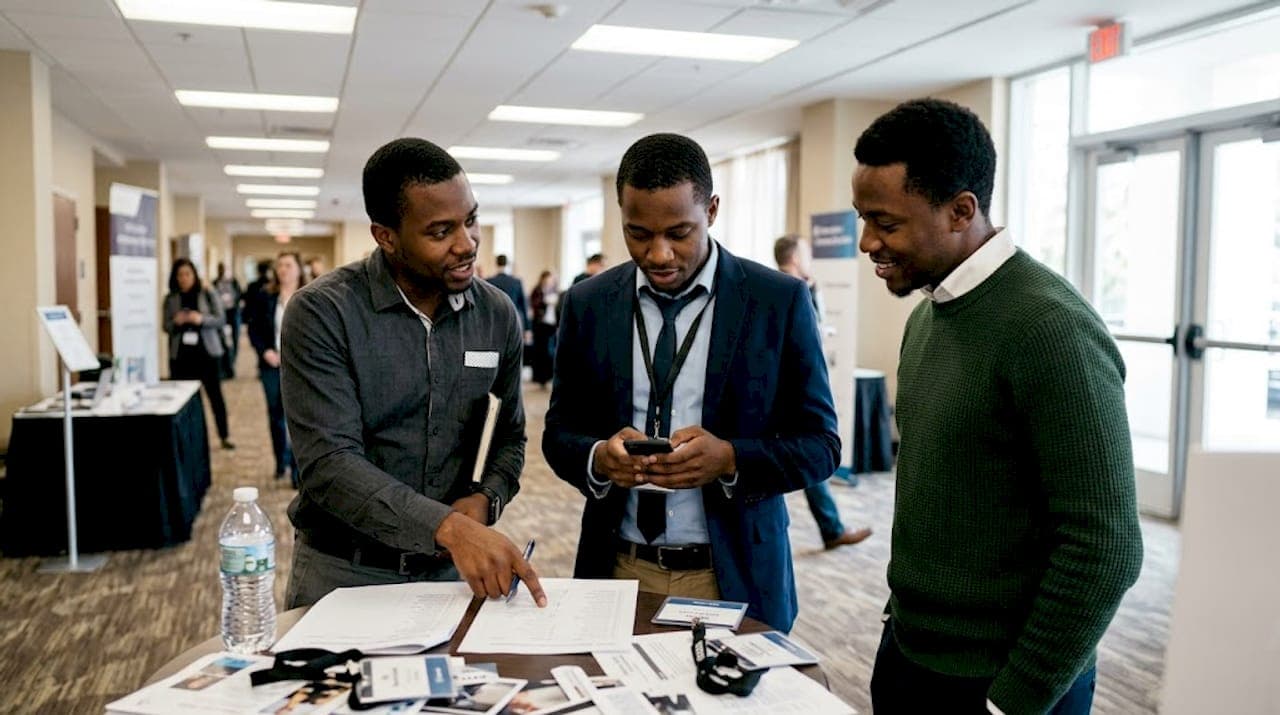
Building a startup in Africa is hard enough. Doing it without the right connections makes it nearly impossible. Investors want warm introductions. Collaborators want context. Partners want trust. Yet many founders still rely on cold outreach and hope for the best. Attending targeted tech events is one of the most proven ways African startup founders break through this barrier. This article walks you through concrete, evidence-backed networking strategies, from in-person events to angel networks to digital platforms, so you can build the relationships that actually move your startup forward.
Table of Contents
- Event and conference networking: Maximizing in-person connections
- Angel networks and syndicates: Building relationships for capital and mentorship
- Digital networking: LinkedIn, content-driven engagement, and online communities
- Accelerators and structured programs: Networking through cohorts, mentorship, and pilots
- A seasoned founder's take: What most networking guides miss
- Next step: Build your startup network with Discors Chat
- Frequently asked questions
Key Takeaways
| Point | Details |
|---|---|
| Curated event networking | Small, focused tech events and mixers provide higher-value contacts than mainstream gatherings. |
| Leverage angel networks | Syndicates and local angel networks offer warm introductions, mentorship, and de-risked funding opportunities. |
| Digital engagement matters | Creating value-first content on LinkedIn and discussion platforms massively increases referrals and opportunities. |
| Accelerators connect founders | Join structured programs for mentorship, peer learning, and corporate pilots, choosing those that fit sector and equity needs. |
| Strategic follow-up | Timely follow-up after events and content engagement is critical for turning introductions into real support. |
Event and conference networking: Maximizing in-person connections
In-person events remain one of the highest-return networking activities for African founders. Not all events are equal, though. The goal is not to attend everything. It is to show up at the right rooms.
Events like Africa Tech Summit and Sankalp Africa Summit are specifically designed to facilitate investor-founder connections. They feature curated deal rooms, pitch competitions, and structured mixers where conversations have intent. These are not generic networking happy hours. Everyone in the room is there to do business.
Here is what makes a tech event worth your time:
- Curated deal rooms where investors and founders are matched by sector
- Pitch competitions that give you a public stage and instant credibility
- Executive or invite-only sessions that filter for serious participants
- Structured mixers with clear conversation prompts or introductions
- Post-event follow-up systems like email threads or shared attendee lists
Tech Unite Africa is another example worth tracking. It brings together founders, developers, and investors across multiple African markets in a single cohort-style format. The density of relevant contacts in one room is hard to replicate online.
"The most valuable conversations I had were not in the main hall. They were in the side rooms, the dinners, and the invite-only breakfasts." This is a pattern experienced founders repeat constantly.
One practical filter: prioritize events where the organizers publish a speaker or attendee list in advance. This lets you research who will be there and prepare specific conversation starters. Generic small talk wastes time. Targeted questions build relationships.
For top networking platforms that complement in-person events, you can extend your reach beyond the conference floor. Similarly, community platforms help you maintain those relationships after the event ends.
Pro Tip: Follow up within 24 hours of meeting someone at an event. Reference a specific detail from your conversation. This one habit separates founders who build lasting relationships from those who collect business cards and forget them.
Angel networks and syndicates: Building relationships for capital and mentorship
Angel networks are one of the most underutilized resources for African founders. Many founders spend months chasing venture capital firms while ignoring a more accessible and often more supportive funding layer.

Africa now has over 110 active angel networks operating across 37 countries, with check sizes ranging from $10,000 to $250,000. That is a significant pool of early-stage capital with mentorship attached.
Key networks to know:
- Lagos Angel Network (Nigeria): One of the most active early-stage investor groups in West Africa
- Jozi Angels (South Africa): Focused on scalable ventures in Southern Africa
- Rising Tide Africa: A women-led angel syndicate with a pan-African lens
- HoaQ: A diaspora-focused collective connecting global African investors to local founders
The difference between angel networks and traditional VCs matters. Angels invest their own money. They move faster, take more personal interest, and often provide hands-on mentorship. Syndicates pool capital from multiple angels, which reduces individual risk and can increase the total check size.
| Feature | Angel networks | Venture capital firms |
|---|---|---|
| Decision speed | Days to weeks | Months |
| Check size | $10k to $250k | $500k and above |
| Mentorship | High, personal | Varies |
| Equity expectations | Lower to moderate | Higher |
| Relationship style | Collaborative | Formal |
The most important thing to understand about angel investing in Africa is that warm introductions drive nearly every deal. Cold pitches rarely convert. Build relationships with angels months before you need funding. Attend their events. Engage with their content. Offer value before you ask for anything.
For founders looking to connect with business community platforms that host angel investor discussions, these spaces can accelerate introductions. You can also track angel investor trends to understand where capital is flowing, particularly in fintech and agri-climate sectors.
Pro Tip: When approaching an angel network, lead with traction data and a specific ask. Vague pitches get ignored. Specific asks, like "I am looking for a $50,000 bridge with a fintech-focused mentor," get responses.
Digital networking: LinkedIn, content-driven engagement, and online communities
In-person and angel networking are powerful, but digital strategies extend your reach and create ongoing engagement between events and meetings.
LinkedIn remains the dominant professional network for African tech founders. But most people use it wrong. Posting your funding announcement once a quarter is not a strategy. The founders who build strong LinkedIn networks post consistently, share specific insights, and engage with others' content before expecting engagement back.
Practical digital networking steps:
- Optimize your LinkedIn headline to state exactly what your startup does and who it serves
- Post short, specific insights from your industry at least twice a week
- Comment meaningfully on posts by investors and founders you want to meet
- Share opportunities, introductions, and resources before asking for anything
- Use LinkedIn search to find second-degree connections at target companies or funds
85% of tech jobs are filled via referrals, and professionals with strong networks earn up to 30% more. The same dynamic applies to startup deals. Most investor introductions come through someone who already knows both parties.
Beyond LinkedIn, specialized forums and discussion platforms offer more focused conversations. Here is a quick comparison:
| Platform | Best for | Noise level | Community focus |
|---|---|---|---|
| Professional visibility | High | Broad professional | |
| Specialized forums | Deep technical topics | Low | Niche and sector-specific |
| Discussion platforms | Real-time founder dialogue | Moderate | Startup and tech communities |
For social platforms for tech networking, the key is choosing spaces where your target audience is already active. Discussion platforms built for African tech professionals offer a more focused environment than general social media. You can also explore tech discussion platforms to grow your career network, and connect through online communities built specifically for African tech professionals.
Content is the most scalable networking tool available. A single post that resonates can introduce you to ten investors you never would have found through cold outreach.
Accelerators and structured programs: Networking through cohorts, mentorship, and pilots
After mastering digital channels, structured accelerator programs give startups another boost via curated peer and mentor networks.
Accelerators do more than provide funding. They compress years of network-building into a few months. When you join a cohort, you gain access to the program's entire alumni network, mentor roster, and corporate partner relationships.
How to maximize your accelerator experience:
- Apply to programs with sector alignment, not just the most prestigious name
- Research the mentor roster before applying, not after
- Prioritize programs with active alumni networks in your target markets
- Ask about corporate pilot opportunities during the selection process
- Engage with every cohort peer, not just the ones in your sector
Katapult Africa and Accelerate Africa offer equity-optional models with investment tickets ranging from $150,000 to $500,000. Equity-optional means you can access the network and mentorship without giving up ownership, which matters a lot during a funding winter when valuations are compressed.
"The cohort peers I met in the program became my first customers, my co-founders' future employers, and my best referral sources. The funding was secondary."
Pan-African cohorts are particularly valuable because they expose you to founders solving similar problems in different markets. A fintech founder in Lagos can learn from a payments startup in Nairobi. A health-tech founder in Accra can find a corporate pilot partner in Johannesburg.
For founders building communities alongside their accelerator journey, resources on building online communities and trending tech discussions can help you stay visible between program milestones.
A seasoned founder's take: What most networking guides miss
Most networking guides tell you to attend more events, post more on LinkedIn, and follow up faster. That advice is not wrong. But it misses the harder truth.
Volume does not build networks. Depth does. A founder who has ten genuine relationships with investors who trust them will always outperform one who has 500 LinkedIn connections and no real rapport with any of them.
The other thing guides miss is local context. African startup ecosystems are not monolithic. Lagos operates differently from Nairobi. Cape Town has different investor norms than Accra. Strategies that work in Silicon Valley often fail here because the relationship dynamics are different. Trust is built slower and valued higher.
Strategic event attendance and 24-hour follow-up are not just tactics. They are signals that you are serious and organized. Investors notice. Mentors remember.
The most underestimated tool in African startup networking is the curated discussion platform. Not Twitter. Not WhatsApp groups. Platforms designed for moderated networking discussions where the signal-to-noise ratio is high and the participants are vetted. These spaces produce more genuine opportunities than mass networking ever will.
Avoid surface-level engagement. Comment with substance. Share what you actually know. Show up consistently. That is what turns a network into a real asset.
Next step: Build your startup network with Discors Chat
You have the strategies. Now you need the right space to practice them.

Discors Chat is a real-time discussion platform built for founders, developers, and tech professionals across Africa and beyond. You can join focused conversations, post insights, follow trending topics in tech and startups, and connect directly with peers, investors, and mentors. It is designed to cut through the noise of traditional social media and give you a moderated, high-quality space for the kind of networking that actually leads somewhere. Sign up with Google or Apple and start building the connections your startup needs today.
Frequently asked questions
How do African founders get warm introductions to investors?
Founders typically build relationships months before fundraising through angel networks, syndicates, and diaspora platforms. Warm introductions come from consistent presence in the right communities, not cold outreach.
What are the most effective digital networking channels for startups?
LinkedIn, specialized online forums, and discussion platforms deliver the strongest results. Over 85% of tech jobs are filled via referrals, which means your digital presence directly affects your access to deals and opportunities.
How can startups choose the right accelerator program?
Focus on sector alignment, mentor quality, corporate pilot access, and equity terms. Equity-optional models like those offered by Katapult Africa and Accelerate Africa let you retain control while still accessing the network.
How big is the angel investing network in Africa?
More than 110 active angel networks now operate across 37 African countries, representing a 27% increase since 2022. This growth signals a maturing early-stage investment ecosystem with real capital available for the right founders.