
Many tech professionals dismiss online communities as time wasters, yet research shows they drive 70-80% of career opportunities through hidden networks. For founders and developers navigating 2026’s competitive landscape, these platforms offer far more than casual discussion. They provide strategic advantages in collaboration, emotional support, and professional growth that traditional networking simply cannot match.
Table of Contents
-
Networking and opportunity access through online communities
-
Keys to building and sustaining successful online communities
-
Ensuring safety and trust: moderation and security in online communities
-
Explore Discors: your partner for meaningful online communities
Key takeaways
| Point | Details |
| Emotional resilience | Peer support reduces isolation and normalizes entrepreneurial challenges through shared experiences. |
| Hidden opportunities | Most job openings and partnerships emerge through referrals, not public listings, making community connections invaluable. |
| Collaborative learning | Diverse membership enables real-time problem solving and skill building through active participation. |
| Trust infrastructure | Effective moderation prevents failure by maintaining safe, productive environments for genuine engagement. |
Understanding the true value of online communities
Tech professionals often underestimate how online communities transform their professional journey. These platforms deliver benefits extending far beyond simple networking into emotional and intellectual territory.
Online startup communities foster emotional resilience through peer support, reducing feelings of isolation and normalizing the emotional strains inherent in entrepreneurship. When you face a critical product decision at 2am, community members who’ve navigated similar challenges provide perspective that mentors and advisors cannot.
Collaborative problem solving in these spaces enhances entrepreneurial skills through real-time feedback loops. You post a technical architecture question, receive five different approaches within hours, and gain insights that would take weeks through traditional channels. This velocity matters when shipping products and iterating quickly.
Diverse membership creates unexpected innovation through cross-pollination. A blockchain developer might solve your API scaling problem using techniques from decentralized systems. A hardware engineer might offer manufacturing insights that reshape your go-to-market strategy.
Communities accelerate learning through shared experiences:
-
Direct access to practitioners who’ve solved your exact problems
-
Real-time feedback on ideas, code, and business strategies
-
Exposure to tools, frameworks, and approaches outside your immediate field
-
Accountability structures that push you beyond solo efforts
“The best communities don’t just answer questions. They challenge your assumptions and expose you to possibilities you never considered.”
These environments serve as living laboratories where you test ideas, receive honest critique, and refine your thinking before investing significant resources. The compound effect of daily exposure to diverse perspectives builds pattern recognition that separates experienced founders from first-timers.
Networking and opportunity access through online communities
Career advancement in tech rarely follows the traditional application process. Understanding how opportunities actually surface changes your entire approach to community participation.

70-80% of job opportunities never get publicly advertised and are filled through referrals and professional networks. That senior engineering role or founding team position gets filled through a conversation in a community channel, not a LinkedIn post. Companies prefer hiring people their team already trusts.
Online communities facilitate genuine relationship building at scale. You contribute thoughtful answers to technical questions, share your startup journey transparently, and participate in discussions without ulterior motives. Over months, other members recognize your expertise and character. When opportunities arise, you’re top of mind.
Effective networking inside communities requires strategic engagement:
-
Provide value before asking for help. Answer questions, share resources, and contribute insights regularly.
-
Build relationships through consistent presence. Show up daily, engage authentically, and remember conversations.
-
Demonstrate expertise through quality contributions. Write detailed answers, share real experiences, and avoid generic advice.
-
Follow up on connections outside the platform. Move promising relationships to direct messages or calls.
Authenticity matters more than volume. Contributing one exceptional answer that solves someone’s critical problem builds more trust than posting generic content daily. Community members spot and reward genuine expertise.
Strategic advantages of community networking:
-
Access to hiring managers and founders before positions are posted
-
Direct introductions to investors and potential cofounders
-
Early knowledge of market shifts and emerging opportunities
-
Reputation building that precedes formal applications
The relationship-first approach transforms networking from transactional exchanges into mutual value creation. You help others succeed, they remember and reciprocate when positioned to do so. This network effect compounds over time, creating opportunities that seem like luck to outsiders.
Keys to building and sustaining successful online communities
Understanding what makes communities thrive helps you identify which ones deserve your time and how to contribute effectively if you’re building one.
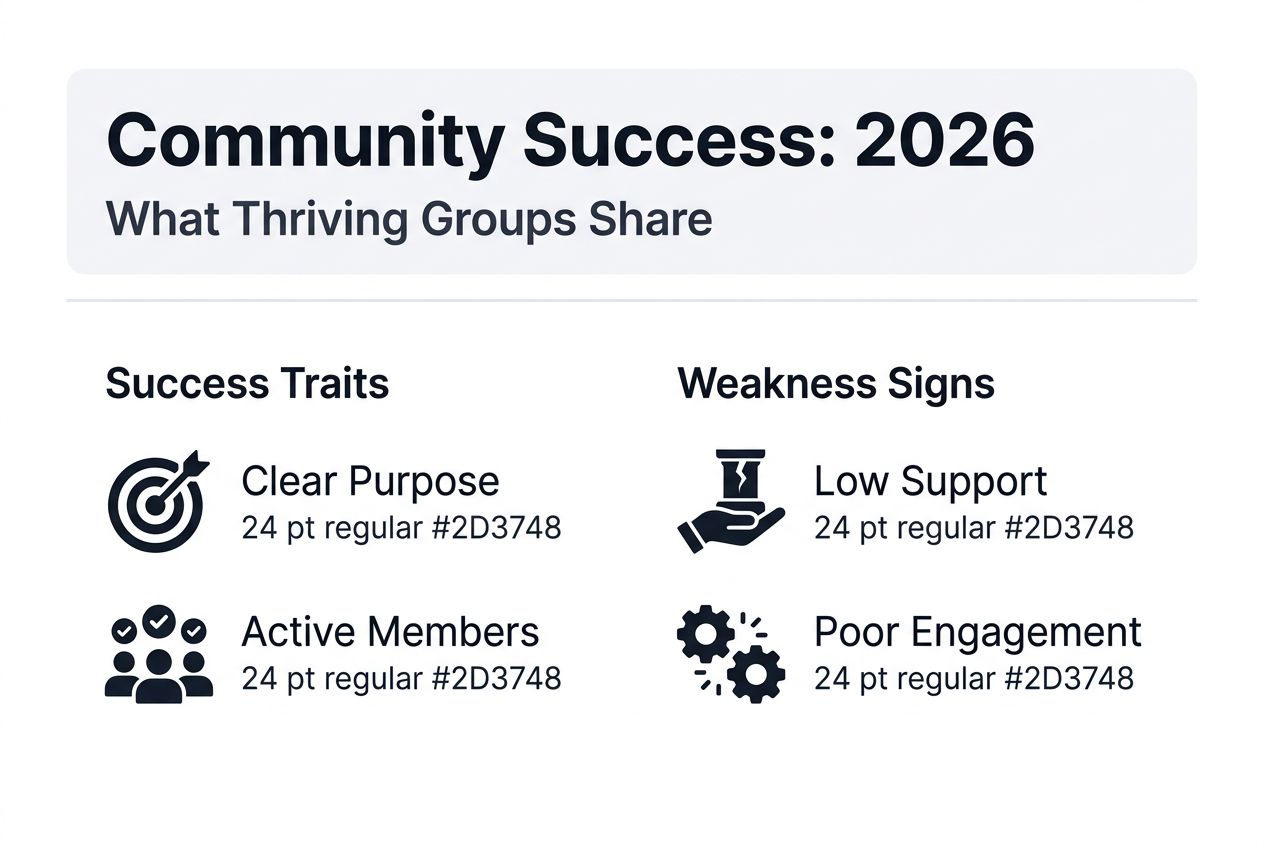
Approximately 31% of online communities fail due to lack of support, and 24% collapse due to poor engagement. These statistics reveal how difficult sustainable community building actually is. Most founders underestimate the ongoing effort required.
Successful communities share common characteristics that separate them from failed attempts. They maintain clear purpose, active leadership, and mechanisms that encourage meaningful participation over passive consumption.
One founder built a 200,000-person paid community with minimal budget by focusing relentlessly on member needs and consistent engagement. The approach centered on understanding what members truly valued and delivering it reliably. Simple execution matters more than complex strategies.
| Success Factor | Thriving Communities | Failing Communities |
| Leadership | Active daily presence, responsive to feedback | Absent or inconsistent engagement |
| Purpose | Clear focus and defined member benefits | Vague goals and unclear value proposition |
| Engagement | Regular conversations, events, and member contributions | Low activity and one-way broadcasting |
| Moderation | Enforced standards maintaining quality discussions | Unmoderated or inconsistently enforced rules |
Understanding your community’s actual needs requires ongoing dialogue and adjustment. Survey members regularly, track which conversations generate engagement, and adapt your approach based on real behavior rather than assumptions.
Pro Tip: Build the community you yourself would want to join and participate in daily. If you’re not genuinely excited to engage, members won’t be either. Authentic enthusiasm from leadership sets the tone for the entire culture.
Sustainability comes from systems, not heroic individual effort. Establish clear onboarding processes, document community norms, develop regular rhythms like weekly discussions or monthly events, and distribute leadership responsibilities among trusted members.
Ensuring safety and trust: moderation and security in online communities
Community longevity depends entirely on maintaining environments where members feel safe engaging authentically. Without robust security and moderation, even the most promising communities deteriorate.
Community security and moderation are crucial for maintaining user trust and brand reputation within online communities. Members abandon platforms where spam, harassment, or data breaches occur. One security incident can destroy years of community building.
Large communities face unique challenges requiring sophisticated approaches. Single-server moderation is no longer enough for managing cross-platform threats and coordinated harassment campaigns. Multi-server moderation coalitions share threat intelligence and coordinate responses to bad actors.
Essential moderation infrastructure includes:
| Tool Type | Function | Impact |
| Automated filters | Block spam, profanity, and known malicious content | Reduces moderator workload by 60-70% |
| User verification | Confirms identity and prevents bot accounts | Increases trust and reduces fake engagement |
| Reporting systems | Enables members to flag problematic content | Distributes moderation awareness across community |
| Audit logs | Tracks moderator actions for transparency | Builds accountability and member confidence |
Governance structures with transparent rules prevent arbitrary enforcement that erodes trust. Publish clear community guidelines, explain moderation decisions when appropriate, and maintain consistency across similar situations. Members accept strict rules when fairly and predictably enforced.
Investing in moderation infrastructure early prevents crises that require expensive cleanup later. Establishing behavioral norms from day one shapes culture far more effectively than attempting to change established patterns after problems emerge.
Pro Tip: Dedicate at least 20% of your community building effort to moderation and security from the start. The communities that survive long-term prioritize member safety as non-negotiable, not as an afterthought when problems surface.
Advanced communities implement layered security combining automated tools with human judgment. AI filters catch obvious violations, experienced moderators handle nuanced situations, and community reporting surfaces issues that slip through automated systems.
Explore Discors: your partner for meaningful online communities
Now that you understand what makes online communities valuable, finding or creating the right environment becomes your next step.
Discors provides a real-time discussion platform specifically built for tech professionals, founders, and entrepreneurs who want genuine collaboration without traditional social media noise. The platform combines community engagement, content discovery, and networking in one moderated space prioritizing safety and active participation.

Whether you’re launching a startup, seeking collaborators, exploring trending tech conversations, or building your professional network, Discors empowers you to discover ideas faster and engage in discussions that actually matter. Sign up with Google or Apple to join communities around technology, business, startups, and innovation where meaningful connections happen daily.
FAQ
What makes an online community meaningful?
Meaningful communities feature active engagement where members regularly contribute valuable insights, not just consume content. They share clear goals, supportive culture that celebrates wins and normalizes struggles, and effective moderation maintaining respectful dialogue. Trust, collaboration, and resource sharing distinguish meaningful communities from casual forums.
How can I find the right online community for my startup or career?
Look for communities with daily discussions directly relevant to your technical field or business challenges. Evaluate culture by observing how members treat each other, especially during disagreements. Strong moderation, visible networking opportunities, and members actively helping each other signal quality. Participate for two weeks before committing significant time to assess genuine fit.
What role does moderation play in community success?
Moderation prevents toxic behaviors, spam, and harassment that drive valuable members away. It ensures conversations remain constructive and focused on shared goals rather than devolving into arguments. Consistent enforcement of clear rules creates psychological safety encouraging authentic participation. Communities with weak moderation experience declining engagement as quality contributors leave for better environments.
How much time should I invest in online communities?
Start with 30 minutes daily focused on quality contributions rather than passive scrolling. Answer one question thoughtfully, share one genuine insight, or engage meaningfully in one discussion. Consistency matters more than volume. As you build relationships and see returns, adjust time investment based on actual opportunities and connections generated.
Can online communities replace in-person networking?
Online communities complement rather than replace in-person networking by enabling relationship building at scale impossible through physical events alone. They provide continuous access to diverse perspectives and maintain connections between conferences. The most effective professionals combine both approaches, using online communities for daily engagement and in-person events for deepening key relationships.